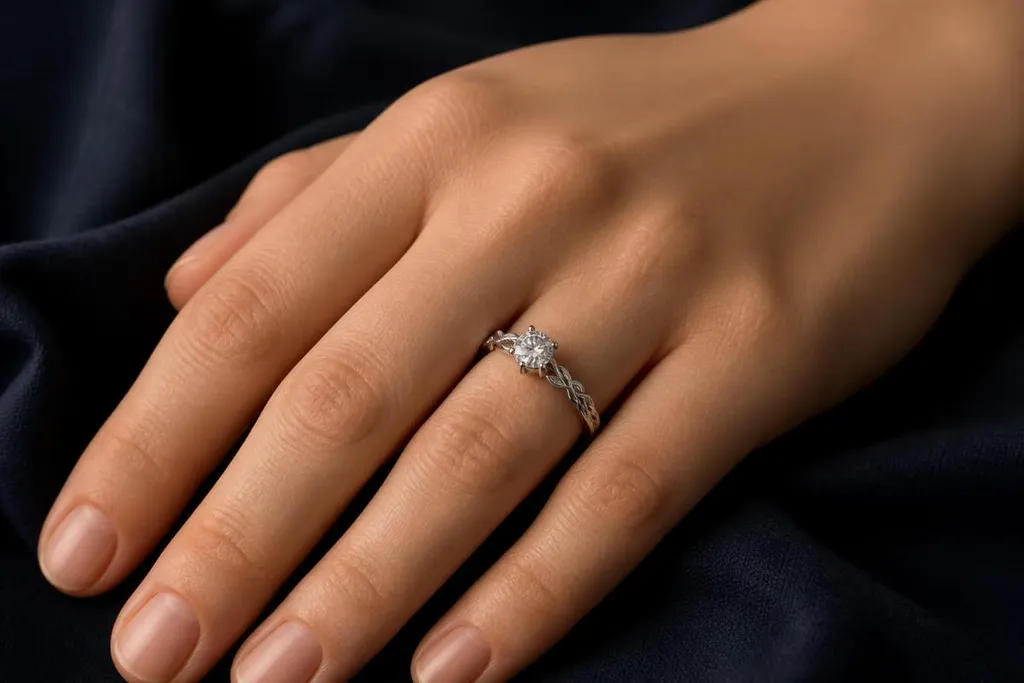
A solitaire engagement ring is often defined by simplicity, but simplicity does not have to mean a perfectly plain band. Nature-inspired details can introduce movement and individuality while preserving the visual importance of a single centre stone. Vine-style metalwork is especially effective because its flowing lines feel decorative without requiring a large number of additional gemstones. In platinum, those details gain a cool, refined character that sits naturally beside a bright lab-grown diamond.
For someone drawn to this balance, the option to order the platinum Eden ring from Lily Arkwright demonstrates how a round lab diamond and 950 platinum vine-style setting can work together. Rather than adding decoration around the centre stone, the design introduces interest through the structure of the ring itself, allowing the diamond to remain the focal point.
Why Vine Details Work in a Solitaire
The traditional solitaire is powerful because the eye immediately understands its hierarchy: one centre stone, supported by a comparatively restrained setting. A vine-inspired band maintains that clarity while making the metalwork more expressive.
Curving lines can suggest stems, leaves or natural growth without reproducing botanical forms too literally. This gives the ring an organic quality that differs from the straight lines and uniform symmetry of a conventional band.
The key is restraint. If the shoulders become too elaborate, they begin competing with the centre diamond. A successful vine-style solitaire uses the detailing to guide the eye towards the stone.
This approach suits someone who appreciates the clarity of a solitaire but finds a completely plain band too minimal. It provides individuality through craftsmanship rather than simply increasing the number or size of gemstones.
That distinction can make the ring feel personal while retaining the enduring qualities associated with solitaire design.
The Role of a Round Lab Diamond
A round lab-grown diamond provides a useful counterpoint to flowing platinum details.
Its symmetrical outline creates a stable visual centre, while the vine-inspired band introduces movement around it. Round brilliant cuts are also known for lively light performance, which gives the centre stone enough presence to remain dominant even when the surrounding metalwork is more detailed than a conventional solitaire.
Size should still be chosen according to the complete composition. A larger centre diamond can create a stronger contrast against the finer vine structure, making the gemstone immediately dominant. Someone might therefore prefer a 2-carat stone because they want a pronounced focal point above the detailed shoulders.
A smaller centre stone can create a more integrated effect, where the diamond and platinum work together rather than one overwhelmingly leading the design.
Neither approach is inherently better. The decision depends on whether the wearer wants the vine details to be a subtle discovery or a more visible part of the ring's overall character.
Why 950 Platinum Suits Organic Detailing
Platinum's naturally white appearance provides an elegant foundation for both a colourless diamond and intricate metalwork.
Because the metal does not introduce a contrasting warm colour, the eye can appreciate changes in shape, texture and contour within the band itself. The vine motif can therefore remain noticeable without visually overpowering the centre stone.
Platinum is also dense and valued for its durability, making it particularly appropriate for fine structural details intended for long-term wear. As with any precious metal, however, the surface will develop marks through everyday use. Platinum typically develops a patina over time, which can give detailed areas a softer appearance.
Some wearers appreciate this gradual evolution, particularly on a nature-inspired design where a perfectly mirror-like finish is not necessarily essential to its character. Professional polishing remains an option for those who prefer a brighter surface.
Routine inspection is sensible too, especially around the centre setting and any finer areas of metalwork.
Styling and Pairing a Detailed Solitaire
A vine-style engagement ring already contains more visual movement than a plain solitaire, so the wedding band should be chosen with the overall composition in mind.
A simple platinum band can provide contrast and allow the Eden-style detailing to remain distinctive. A diamond-set wedding band can add further brilliance, although keeping its design relatively structured may prevent the pairing from becoming overly busy.
The engagement ring's profile also matters. Depending on how the vine shoulders and centre setting are constructed, a straight wedding band may sit differently than it would beside a conventional solitaire. Checking the fit as a pair helps create a more deliberate bridal set.
Other jewellery can remain understated. Simple platinum or white-metal earrings and a restrained pendant will complement the ring without repeating its botanical detailing too literally.
Final Thought
A nature-inspired solitaire offers a thoughtful middle ground between minimalism and ornament. The round lab diamond preserves the unmistakable focus of a classic solitaire, while vine-style 950 platinum details introduce movement, craftsmanship and personality.
The result is most successful when those elements remain balanced. Rather than decoration for its own sake, the organic metalwork should support the centre stone and give the ring character from different angles. That subtle complexity is precisely what can make a nature-inspired solitaire feel distinctive for years to come.